
Showing posts with label free music game. Show all posts
Showing posts with label free music game. Show all posts
Tuesday, 30 November 2010
December's Game of the Month
December's free music game has just been uploaded. Called Seven of Eight, it's one for the whole group or class. Versatile as they come, this exercise can be made simple enough for five year olds or sufficiently challenging to stretch accomplished adults. Go ahead and assimilate it.


Tuesday, 7 September 2010
September's free music game
This one is called Biddly Biddly Bop and I got it from an actor friend called Lucy. I usually post a game at the beginning of each month but various factors contributed to a delay this time around. It's an excellent back-to-school activity or workshop icebreaker. Enjoy.
Monday, 2 August 2010
August's free music game
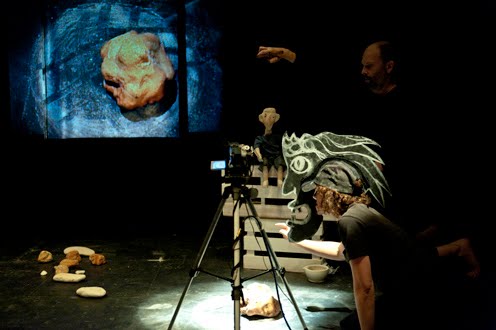 If you have yet to visit my website you may be unaware that there it hosts a number of music games that are free to use and require no special equipment, knowledge or training. And every month, in addition to that, I post a 'for one month only' game. This month's is a listening game. It is called Detective 2 and is a development of Detective which is on the free music games page.
And this may be the last post for a while as I'm off to the Edinburgh Fringe with The Chalk Giants (pictured) about which much has been written already. Enjoy your summer.
Thursday, 1 July 2010
July's free music game
 As regular readers will be aware, a new free music game appears on my website each month. This month's game is called Pot Luck Orchestra and is a sonic exploration of found objects. Fun for all!
Meanwhile, I have been rather quiet lately, not because nothing is happening but because I have yet to get around to blogging about it. I shall rectify this situation in the next few days and share my tales of midsummer madness.
And what better time to plug my other blog which tells the unfolding story of jazz/klezmer outfit Eastern Straynotes ?
Wednesday, 2 June 2010
A new month, a new game
 This month's free music game is for any number of people and is suitable for a wide age range, from about 6yrs to adult. It is particularly good for waking up your group's powers of concentration and getting brain and body working together. If you have a regular group, or are a classroom teacher, and can keep returning to the game, you will notice steady improvement over time. Once children, in particular, know the format it can be used to good effect in odd moments of 'spare' time.
Target is a counting exercise. The object is to place a sound , be it a handclap, word or note, in a specified place in in a bar. In my experience musicians don't generally count in the literal sense of the word. It's more a case of feeling or knowing. If I were to show you three apples or four pencils you wouldn't need to count them to tell me how many were there. You would just 'know'. We don't usually count numbers of five or less because we can tell the quantity at a glance.
Musicians, who don't usually deal in numbers bigger than four, begin by counting but soon learn to feel when a certain number of beats or bars has passed. The counting becomes internalised and subconscious. This game will help speed that process for beginners. It will also improve the rhythm and timing skills of experienced players.
Monday, 3 May 2010
May's monthly game
 This month's free music game is played in pairs. It's called Count to Three and that's all you have to do. Except, of course, that it isn't quite as simple as that. The difficulty comes from alternating the count with your partner. To learn how to play it just click on the link to the page on my site.
I first came across this game when working as musical director for Tiebreak Theatre's production of Frog in Love and readying it for its trip to the Edinburgh Fringe in 2003. David Farmer was directing the show and rehearsals always began with extended warm-ups and this was one of the games we played. I had almost forgotten it and then a drama teacher I was working with last week used the game with some primary aged children. What's great about the game is that children of six can play it as easily as adults. Or perhaps I should say with equal difficulty.
This is probably a good time to mention David Farmer's book 101 Drama Games and Activities which is full of warm-ups and exercises. It contains this game but he calls it One Two Three, a name I use for an entirely different game. And thet picture, in case you are wondering, is an unusual view of Sir Norman Foster's Sainsbury Centre for the Visual Arts.
Thursday, 1 April 2010
April's free music game
This month's featured free music game is called Duets. It's a good way introducing a collection instruments to a large group in a short space of time. It works even better with a smaller group and a longer time frame but the point is that it does work with a large group. And it works well. I have found it a very useful ingredient when running taster sessions.


Tuesday, 2 March 2010
Another month, another game

For those who don't yet know, I post a new music/sound game on my website at the beginning of each month. This month's is called Call My Name and is good for developing rhythm skills, good for developing listening skills and, well, just good fun. It's absolutely free so be my guest and take a look. It's aimed at players from nine years old to adult and should keep your group amused and productively engaged for five or ten minutes at least.
From that page you are just a click away from several other games that are permanent features of the site. Again, these are free to play and completely without obligation.
Sunday, 31 January 2010
February's Game of the Month
 Regular readers will know I post a free music game at the beginning of every month on the PlayWithSound website.
This month's is called Supercar and is a rhythm and speaking game, equally suited to both music classes and drama workshops.
It requires neither instruments nor any specialist knowledge but will nevertheless give your students and colleagues something to get their teeth into.
Saturday, 2 January 2010
January's Game of the Month
 Regular readers will know I post a different free music game at the beginning of each month. January's is called Mind the Gap and centres on the difference between pulse and rhythm, two concepts that are often confused. This game ably distinguishes between the two in a way no theoretical explanation can manage alone.
I also put out a monthly newsletter, Playing With Sound, containing other ideas and activities. January's will go out in a day or two and includes a handy warm-up game called Follow That! with applications for language, drama and general activities as well as music. Signing up for the newsletter is free and you can unsubscribe at any time with just a click of your mouse. As well as the newsletter each month you will receive, initially, a short series of emails containing teaching ideas. I don't share my subscriber list with anyone else.
Wednesday, 2 December 2009
 Each month I post a free music game on the Play With Sound website. This is in addition to the other free music games on the site that have proved so useful in schools, drama workshops. December's Game of the Month is suitable for adults and children over nine.
Called Telephone it has a communication theme but is really about developing fluency with three simple rhythmic motifs. The fun bit is using these to contact other players. In order to do that one must develop the skill of of hearing and reproducing the motifs accurately.
Telephone will develop rhythmic, listening, communication and improvising skills. The rhythms can be clapped or played on instruments. Let me know how you get on.
Sunday, 1 November 2009
Free game for November
 If you can tap your foot you should try November's free music game. Inspired in part by Luke Rhinehart's 'The Dice Man' it involves rolling dice to decide what beats to play on.
You really don't need any 'proper' musical instruments for this game. A tin can, comb, hole punch or plastic bag will work just as well. Obviously, if you happen to have a Stradivarius violin to hand don't hide it away: that will sound just fine too.
Anyone can play. And you really don't need a fancy die like the one in the picture. A standard-issue six-sider will work just as well. Or you can make yourself a spinner with a matchstick and a piece of cardboard.
I post a new game every month, in addition to the ten on the website. If you sign up to the newsletter you need never miss one. The dice game is great fun. Cause a stir by playing it between courses at your local restaurant - there are plenty of things to make sounds with on a dining table.
Thursday, 1 October 2009
More free music games
October's free music Game of the Month, Phasing Out, is now on the website. The site is undergoing some changes and they are all for the better. It will soon feature more free music games suitable for workshop leaders, drama teachers and classroom teachers at both primary and secondary levels. And if you play in a band you could even cause a stir by playing then with your fellow musicians.
Monday, 31 August 2009
September's free game
September's game of the month has moved here temporarily while I sort out my PC and try to recover several lost files, including a more finely crafted version of this very game. As well as providing other benefits it is a perfect back-to-school game, allowing you to learn the names of a new class and giving the children the opportunity to remember and reinforce their class identity. Oh, and don't forget to check out the new free music games page on the website.
Who's calling?
Duration: 5 - 10 minutes depending on numbers
Age: 6 - 13
Players: the whole class
This is designed for children sitting at desks. Itis not a prerequisite but it is perfect for getting to know a new class and if the children are stationary rather than moving around it can be easier to remember their names. It's very similar to other voice recognition games but is easier because the direction from which a sound comes gives a clue as to its source. I make three claims for it:
1. You will get to know the names of the children.
2. The children's awareness of the others in the class will improve
3. It will improve listening skills
Make sure that any new children are known to the rest of the class. You will need to decide what form of names to use. I suggest the names the children are normally known by in school. (Children from other countries with names that are hard to pronounce are often known by nicknames or the closest local equivalent.) Make it clear that any name-calling will not be tolerated.
· Choose one child to be the first listener. Offer them a blindfold if you like but at any rate they must close their eyes. Select another child to be the first caller. Do this by pointing to them.
· The caller sings the name of the first child who must identify the owner of the voice. If the listener guesses right then they pass the blindfold to the caller. If they guess wrongly the caller sings their name again. If, after three calls the listener has failed to identify to caller, that caller is 'safe' (for the time being at least) and you must choose a new caller.
· When a caller is identified they become the next listener.
· Continue in this manner until everyone has had a go at either calling or listening, if not both.
Tips: A confident child who enjoys high status will make a good first listener, is more likely to wear a blindfold and will set the tone for the rest of the game. However, they may make a poor first caller unless they are confident singers because they will fear losing face.
Although the children are relatively safe because they are seated, it is worth stressing that harassment of anyone wearing a blindfold is completely unacceptable.
Monday, 24 August 2009
Music game - Wobble
Not a 'back to school' game - you'll have to wait for September's Game of the Month for that - more of a holiday relaxation.
Duration: 10 minutes
Age: Consenting adults
Players: Any number of pairs
By focussing their attention elsewhere this activity relaxes the participants' throats and so warms up their vocal cords without straining them. The exercise came from a butoh workshop and is intended both to ground and centre the members of the group.
The 'consenting adults' suggestion is because the players have to touch each other's legs, albeit through clothes. Adults are not immune to self-consciousness but they are usually capable of getting over it. Of course if your players are used to physical contact you'll have no problem in that regard.
 · Divide into pairs. If your group is new, or unused to physical touch, you may like to pair men with men and women with women. At the very least be sensitive to people's attitudes to being touched by someone of the opposite sex, especially where cultural taboos exist. If in doubt check you have even numbers of both genders before initiating the game.
 · Their partner, the giver, kneels in front of them and, starting at the upper thigh, uses both hands to wobble the flesh of the leg. They work slowly down the receiver's leg towards the ankle and when they reach the foot they press firmly on the upper surface as if trying to push the foot into the ground. While they wobble the leg they sing into the flesh in any manner they feel appropriate. Their voice may wobble too or it may be a constant tone. The pitch and timbre may or may not vary. There is no right or wrong. The receiver joins in with the singing, either in mimicry or response.
 · Do this twice more on that leg and then the receiver shifts their weight into the leg that has been worked on and presents their other leg. The giver wobbles the second leg in the same manner three times. Then the partners swap roles and the giver becomes the receiver.
Tips: This activity is best done in loose, comfortable clothing such as track-suit trousers. It is easier to work a clothed leg than a bare one.
Join in yourself and, vocal-wise, lead from the front.
Duration: 10 minutes
Age: Consenting adults
Players: Any number of pairs
By focussing their attention elsewhere this activity relaxes the participants' throats and so warms up their vocal cords without straining them. The exercise came from a butoh workshop and is intended both to ground and centre the members of the group.
The 'consenting adults' suggestion is because the players have to touch each other's legs, albeit through clothes. Adults are not immune to self-consciousness but they are usually capable of getting over it. Of course if your players are used to physical contact you'll have no problem in that regard.
 · Divide into pairs. If your group is new, or unused to physical touch, you may like to pair men with men and women with women. At the very least be sensitive to people's attitudes to being touched by someone of the opposite sex, especially where cultural taboos exist. If in doubt check you have even numbers of both genders before initiating the game.
· In each pair one person, the receiver, puts their weight almost fully into one leg and presents the other one to their partner, keeping that foot on the ground and using to retain stability. Both knees should be unlocked.
 · Their partner, the giver, kneels in front of them and, starting at the upper thigh, uses both hands to wobble the flesh of the leg. They work slowly down the receiver's leg towards the ankle and when they reach the foot they press firmly on the upper surface as if trying to push the foot into the ground. While they wobble the leg they sing into the flesh in any manner they feel appropriate. Their voice may wobble too or it may be a constant tone. The pitch and timbre may or may not vary. There is no right or wrong. The receiver joins in with the singing, either in mimicry or response.
 · Do this twice more on that leg and then the receiver shifts their weight into the leg that has been worked on and presents their other leg. The giver wobbles the second leg in the same manner three times. Then the partners swap roles and the giver becomes the receiver.
Tips: This activity is best done in loose, comfortable clothing such as track-suit trousers. It is easier to work a clothed leg than a bare one.
Join in yourself and, vocal-wise, lead from the front.
Saturday, 1 August 2009
Free Game for August - Fish and Chips
 I love gigs within cycling distance and last night I played at Will Giles' Exotic Garden, a fabulous place near the railway station. The event was a party for Norwich's Green Party which, never having wielded power of any kind, are still considered cute and cuddly and immune from the opprobrium that is traditionally heaped on the spenders of public money. Ironically I had a puncture on the way and, looking for a safe place to put my bike on a Friday night, left it outside the Plantation Gardens, another favourite haunt.
There was enough stone and brick-work at Will Giles's place to make for a good acoustic. It's built on the side of a steep hill so there's a sense of being in an amphitheatre when playing. Although amplification was technically forbidden Andy still managed to sneak his battery powered Pig behind a palm leaf to enable a reasonable balance with the clarinet. Our mix of klezmer and jazz usually hits the spot and this was no exception.
I have just posted a new Game of the Month for August on the website. Fish and Chips was taught to me by a group of ten year olds earlier this year but I believe its appeal is universal by both age and geography. In case you are wondering, chips are deep fried lengths of potato, roughly equivalent to North American fries and what the French call pommes frites. By all means substitute a food item with which your players will be familiar. If you are playing in Spanish please try the word 'paella' and let me know how you get on.
The game is perfect for bonding as the individuals in the group have to listen closely to each other. I hate to say it, so early in the holiday season, but it's a perfect 'back to school' game.
Talking of holidays, this is my last post for a couple of weeks. I'm off to a couple of camps to play live music for various dance forms and will tell all on my return. May the sun shine on us all but especially on my tent.

Thursday, 30 July 2009
Aeolian Roof Box
 If you've been following this blog you'll know I went to see some musical theatre last week rather than go and look at a roof box. In fact I went the next morning, prior to a weekend's camping and jamming in the woods near historic Bury St Edmunds.
I duly bought the box and headed for home. I was about to turn on the radio, my chosen CD having been refused by the in-car entertainment system, when I was treated to the song of the roof box. Sweeter even than those ancient sirens who charmed Odysseus. Mind you, they had to compete for attention with the Aegean Sea: the A140 is easier to upstage.
 Factors including wind direction and speed of travel made for an enjoyable ride back listening to the roof-bars and box run through the harmonic series. And in case you're wondering if I've lost the plot, others have enthused unbidden. It was my best motoring experience since Classic FM used birdsong as a test signal back in the 1990s. Had I known the roof-box vendor was throwing in an aeolian harp I may have forced another tenner on him.
Well it's nearly time for a new game. August's Game of the Month will have a seaside flavour, although it can be played anywhere. Look out for it from Saturday. Meanwhile it's not too late to check out the July offering at http://www.playwithsound.com/music-game.html Called Limelight you may find it useful if you are faced with a disparate band of would-be musicians at a workshop or play-scheme this summer.
Wednesday, 15 July 2009
July's Free Game - Limelight
The summer term is almost over. I have the last school concert to attend this evening and have already fired up my last examination entrant for her Grade 5 flute exam on Monday. A strange time, therefore, to remind you of July's Game of the Month? The last thing anyone involved in classroom teaching will be thinking about right now is September's restart but it will only take you a moment to cut and paste it into your games folder. (You don't have a games folder? Shame on you!)
For those of us workshopping in the summer break this is a good game for a new and disparate group of varying ages and abilities. It is sufficiently robust to withstand a little anarchy. Just make sure you are holding the loudest, beatiest instrument and lead from the front. Enjoy!
For those of us workshopping in the summer break this is a good game for a new and disparate group of varying ages and abilities. It is sufficiently robust to withstand a little anarchy. Just make sure you are holding the loudest, beatiest instrument and lead from the front. Enjoy!
Monday, 1 June 2009
June's Game of the Month
Every month I post a new, and absolutely free, music game at www.playwithsound.com where clicking on 'this month's free game' will take you right to it.
June's free music game is called Echo Me and is highly adaptable. It can be played with voices or instruments, can be made harder or easier and can be played educationally, but enjoyably, with children from five to one hundred and five. So versatile is this game that it can be played in a few odd moments as a filler or can be stretched for as long as your group has an appetite for it. And this can be a long time if you build it up in steps, as suggested, and add instruments to the mix. Have a go and let me know what you think.
June's free music game is called Echo Me and is highly adaptable. It can be played with voices or instruments, can be made harder or easier and can be played educationally, but enjoyably, with children from five to one hundred and five. So versatile is this game that it can be played in a few odd moments as a filler or can be stretched for as long as your group has an appetite for it. And this can be a long time if you build it up in steps, as suggested, and add instruments to the mix. Have a go and let me know what you think.
Sunday, 24 May 2009
May's free game
Just a reminder that every month I post a (free) music or sound related game to play with other people. You can find it on my playwithsound.com website. This month it's a game called Hide and Listen and its purpose, besides fun, is to develop aural perception. An unexpected insight I've gained from playing this with groups of ten-year-olds recently is the extent of the gender divide at that age. Boys quickly indentified their male friends but were flummoxed when they had to distinguish between the voices of the girls. And vice versa. The only exceptions were when kids with very distinctive accents or adults took part.
Rare occasions when a male voice was mistaken for a female caused great hilarity. The rounds where funny voices were allowed were also popular and gave the foreign children more of a chance. Adults, however, never stand any chance in kids' games - at least not the adults I've played with.
Rare occasions when a male voice was mistaken for a female caused great hilarity. The rounds where funny voices were allowed were also popular and gave the foreign children more of a chance. Adults, however, never stand any chance in kids' games - at least not the adults I've played with.
Subscribe to:
Posts (Atom)


 Posts


